
Calculate Post-Retirement Expenses Easily
Personal Finance, retirementplanning, 401k, 401krollover
How to Figure Out Your Expenses After Retirement (So You Know What You Really Need)
Planning for retirement can feel overwhelming, but it becomes much simpler when you start with one key question: What will my expenses look like after I retire? Once you have a clear picture of that number, you can work backward to see how much you’ll need in savings, your 401k, and other accounts to support the life you want.
Step 1: Start With Your Current Spending (Then Adjust for Retirement Life)
A friendly place to start is your current monthly budget. Look at your bank and credit card statements from the last three to six months and group your spending into simple categories:
Housing (rent or mortgage, property taxes, insurance, utilities)
Food (groceries, dining out, takeout, coffee runs)
Transportation (car payment, gas, maintenance, public transit, rideshare)
Health (insurance premiums, prescriptions, co-pays, over-the-counter items)
Lifestyle (travel, hobbies, entertainment, gifts, subscriptions)
Total these categories to see what you spend now. Then ask yourself, “Will this go up, down, or stay about the same in retirement?” For example, commuting costs may drop, but travel or hobbies might increase once you have more free time. This is the foundation of practical retirementplanning: translating today’s lifestyle into tomorrow’s numbers.
Step 2: Separate “Needs” From “Wants” in Retirement
Next, divide your future retirement expenses into two buckets: must-haves and nice-to-haves. This makes your plan more flexible and less stressful, because you’ll know which expenses are truly essential.
Needs: Housing, basic food, utilities, insurance, medical care, basic transportation, and minimum debt payments (if any).
Wants: Travel, dining out frequently, premium TV packages, new gadgets, luxury cars, and big-ticket hobbies.
Add up your monthly needs first. This gives you the minimum income you’ll want your Social Security, pension, 401k, and other savings to cover. Then total your wants to see what it would cost to live your “ideal” retirement. Knowing both numbers helps you adjust your retirementplanning if markets change or life throws you a curveball.
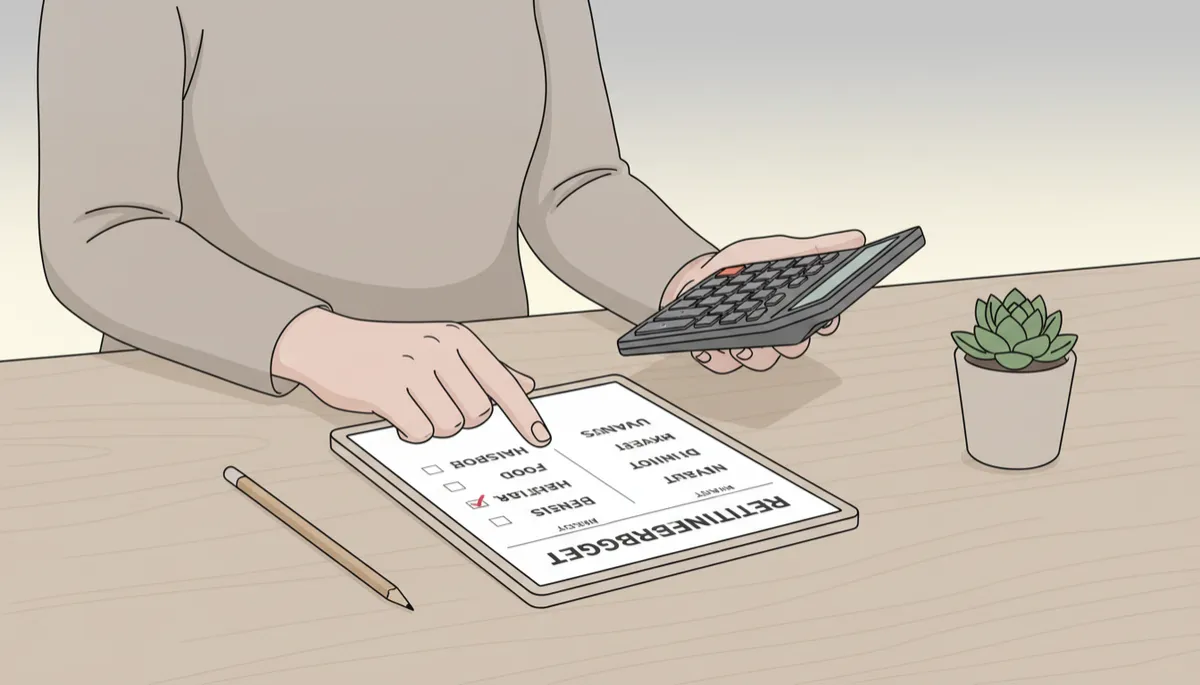
Separating needs from wants makes your retirement plan more flexible and realistic.
Step 3: Don’t Forget Health Care and One-Time Big Expenses
Health care is one of the biggest wild cards after retirement. Even with Medicare, you’ll likely face premiums, deductibles, and out-of-pocket costs. It’s wise to build in a generous health care line item in your expense estimate, especially as you age. You might also consider supplemental insurance or a Health Savings Account (HSA) if you’re eligible before retiring.
Also think about irregular or one-time expenses that don’t show up every month but still matter, such as:
Replacing a roof or major home repairs
Buying a new car every 8–10 years
Helping kids or grandkids with education or special events
A simple way to handle these is to estimate the total cost, divide by the number of years until you expect to pay it, and treat that as a yearly “sinking fund” in your retirement budget.
Step 4: Turn Monthly Expenses Into “How Much You Need to Retire”
Once you’ve estimated your monthly retirement expenses, you can translate that into a target savings number. Here’s a friendly rule of thumb many planners use: the 4% rule. It suggests that you can withdraw about 4% of your invested savings each year, adjusted for inflation, with a reasonable chance your money will last 25–30 years.
To use it, first calculate how much income you’ll need from savings each year:
Add up your annual retirement expenses (monthly total × 12).
Subtract expected income from Social Security, pensions, or part-time work.
The remaining amount is what your savings—like your 401k and IRA—must cover.
Then divide that yearly “gap” by 0.04 (which is 4%). For example, if you need $30,000 per year from savings, $30,000 ÷ 0.04 = $750,000. That’s a rough estimate of how much you may need to retire comfortably, assuming you follow a conservative withdrawal strategy.
Step 5: Connect Your 401k and 401k Rollover to the Big Picture
Now that you know how much you might need, it’s time to see how your current savings stack up. Log in to your retirement accounts and note the balances in your 401k, IRAs, and other investment accounts. If you’ve changed jobs, you may have old workplace plans that could benefit from a 401krollover into a single IRA or your current 401k. Consolidating can make retirementplanning easier and help you see your progress at a glance.
Compare your total retirement savings to your target number. If there’s a gap, don’t panic. Instead, ask:
Can I increase my contributions to my 401k or IRA?
Am I invested in a way that matches my time horizon and risk comfort?
Would working a couple more years or doing part-time work in retirement help?
💡 Friendly Tip: When considering a 401krollover, look at fees, investment options, and any benefits you’d lose by leaving money in your old 401k. A financial professional can walk you through the pros and cons for your situation.
Step 6: Review Your Plan Regularly and Adjust as Life Changes
Your retirement expenses and savings needs aren’t carved in stone. Health, family, markets, and your own goals can all shift over time. A friendly habit is to review your retirementplanning at least once a year:
Update your expected retirement expenses and timeline.
Check your 401k and other accounts to see if you’re on track.
Adjust savings rates, investment mix, or your retirement age if needed.
Bringing It All Together
Figuring out your expenses after retirement is the heart of smart retirementplanning. By understanding what you’ll spend—on both needs and wants—you can estimate how much you’ll need to retire, see how your 401k and other savings fit in, and decide whether a 401krollover or other moves make sense for you. The result isn’t just a number; it’s confidence that you’re building a retirement that matches the life you imagine.
